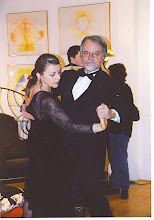
WASHINGTON, D.C. – February 19, 2012 - The Fairmont Washington, D.C. is pleased to announce “An Afternoon Etiquette” for young ladies and gentlemen. This upbeat class teaches children, ages 7 – 12, the importance of feeling good about themselves in a variety of social situations. Washington, D.C. Protocol Expert Carole M. Randolph teaches the first “Afternoon of Etiquette” class on Sunday, April 29, 2012 from 1:30 to 5:00 p.m.
Learning to become the perfect, relaxed hosts and hostesses is essential for children who are growing up in the Washington Metropolitan area. The class includes telephone and e-mail etiquette, thank you note writing, going through a receiving line, the art of small talk, everyday courtesies and how to make a toast. Ms. Randolph will also provide guidance on how to enjoy a multi-course American meal using the correct silverware and perfect to these future doctors, lawyers, politicians and ambassadors.
Each “Afternoon of Etiquette” class concludes with a presentation of an etiquette booklet and a gift to each student by Ms. Randolph. A $125 fee includes all instruction, materials and a formal dinner. For more information, or to make reservations, please contact Carole M. Randolph at 301.881-9144 or Carolehats@aol.com or Diana Bulger at 202-457-5019 or Diana.Bulger@fairmont.com.
Located at 2401 M Street, NW, The Fairmont Washington, D.C. is convenient to the finest museums, theaters (including the Kennedy Center), shopping and dining. Close to two metro stations, it is five miles from Reagan National Airport and 33 miles from Dulles International Airport. At 415 rooms and luxury suites, The Fairmont Washington, D.C. offers a wealth of facilities while maintaining an air of tranquility insured through the design of intimate spaces, plenty of natural daylight, and a cascade of plants both inside and out.
ABOUT FAIRMONT HOTELS & RESORTSFairmont Hotels & Resorts, which will arrive in destinations as diverse as Jaipur, Kyiv and Manila in 2012, is a celebrated collection of more than 60 luxury properties around the globe, including Shanghai's Fairmont Peace Hotel, The Plaza in New York, and Makkah Clock Royal Tower in the Kingdom of Saudi Arabia. The luxury brand's distinctive hotels offer a sense of heritage and sophistication, warm, engaging service and culturally rich experiences. A community and environmental leader, Fairmont is also recognized internationally for its responsible tourism practices and award-winning Green Partnership program. Fairmont is owned by FRHI Holdings Limited, a leading global hotel company with over 100 hotels under the Fairmont, Raffles, and Swissôtel brands. The company also manages Fairmont and Raffles branded estates and luxury private residences. For more information or reservations, please call 1-800-441-1414 or visit fairmont.com.
Become a fan of Fairmont. Join our online communities at everyonesanoriginal.com, facebook.com/fairmonthotels, and twitter.com/fairmonthotels. For career opportunities, visit facebook.com/fairmontcareers.
Saturday, September 08, 2012

Saturday, August 25, 2012
Credit Union Cherry Blossom Ten Mile:
40th Credit Union Cherry Blossom Ten Mile Run Was One For The Record Books
From Allan Kiprono’s Course Record, to Course Recordholder Colleen De Reuck’s Pending U.S. Age Group Record for Women 45-49, April 1 Was a Fast Day for Running in the District of Columbia.
May 7, 2012, Washington, DC: The Credit Union Cherry Blossom Ten Mile Run and 5K Run-Walk on Washington’s National Mall was chock full of winners on Sunday, April 1, 2012. From frontrunners to age groupers, new standards were broken by numerous participants.
As many expected, last year’s second-place runner, Allan Kiprono, won the men’s race – what wasn’t expected was the fact that he broke the Course Record set by Lelisa Desisa in 2011 by 21 seconds, running 45:15 to win by the widest margin in recent Cherry Blossom history, one minute and 13 seconds. No surprise, however, was fellow Kenyan Jullia Tinega’s repeat victory in the women’s race in 54:02. Tinega led the field of elite women runners from the start, including Colleen De Reuck, who set the standing Course Record for women (51:16) in 1998. This year, at the age of 47, De Reuck ran a pending age group record for women 45-49 of 58:14 to place 10th overall.
An interesting competitive sidelight to this year’s 40th running of “The Runner’s Rite of Spring®,” was a special award for any runner, male or female, who ran faster than Sam Bair (51:22) or Kathrine Switzer (1:11:19) ran to win the inaugural Cherry Blossom Ten Mile Run in 1973. At the end of the day, 16 male runners and 212 female runners earned mugs that boast “I would have won this race in 1973!”
Results from the Washington Metropolitan Area Team Championship were based on the combined times of each team’s three fastest runners and, due to the complexity of scoring teams when runners tend to swap race numbers, were just finalized on April 30. Pacers won the men’s team competition, with a combined time of 2:32:12, Georgetown Running Company was second in 2:35:22, and PR Elite was third in 2:43:35. The women’s team competition saw Georgetown Running Company take top honors in 3:00:44, Pacers was second in 3:01:34, and PR Racing placed third in 3:14:27.
Twenty-one runners from Teens Run DC finished the race. Teens Run DC is a Washington, DC based program designed to empower at-risk youth to envision and work towards the achievement of personal goals through an adult mentoring and distance running program. The top Teens Run DC runners included Terrance Bullock, 5th, and Genuine Kinsey, 16th, in the 5K Run Walk. In the 10-miler, Ross Pendergast placed 9th and Noah Howard placed 11th on the men’s side of the 19-and-under age group, while Yael Holtzman-Castellands placed 12th among females in the same age group. Every student in the group finished the race they entered, making them all winners in the minds of their 26 mentors and teachers, who also participated in the races.
Over 900 Capitol Hill staffers took part in the annual Capitol Hill Competition, highlighted by 43 Senate teams and 37 House teams. Top team honors went to the “Two Extreme for Colorado” team from the office of Senator Michael Bennet, and the “Red, White and Blumenaur” team from the office of Congressman Earl Blumenauer.
Ben Beach completed the race for the 40th consecutive time, running in 1:37:04. The 62-year-old Bethesda, MD resident is the only runner to have completed every edition of the race. Just over two weeks later, Beach moved into a tie with Neil Weygandt for most number of consecutive Boston Marathons completed – that total is 45. Weygandt did not compete this year.
Other noteworthy statistics include Metro ridership of 13,767 on race day, up from 13,162 in 2011, but less than the peak of 13,900 riders in 2010. (Race organizers have an arrangement with Metro to open stations early on the Sunday morning to encourage runners and spectators to take advantage of public transportation, rather than struggle to find parking and increase already heavy traffic in and around the National Mall.) In addition, race organizers encourage runners who cannot take advantage of Metro to purchase carbon offsets from NativeEnergy to mitigate the impact of their travel to the race; carbon offsets were priced at $3.75 this year to coincide with the average roundtrip Metro fare, and 841 runners supported the program, raising $3153.75 for NativeEnergy.
On the fundraising front, a total of $515,000 was raised for Children’s Miracle Network Hospitals this year, bringing the total amount of money raised since the Credit Unions became the title sponsor of the Cherry Blossom Run in 2002 to over $5.5 million dollars.
This year’s event took place on the second weekend of the National Cherry Blossom Festival®, the nation's greatest springtime celebration. The 2012 Festival, March 20 – April 27, included five spectacular weeks of events featuring diverse and creative programming promoting traditional and contemporary arts and culture, natural beauty, and community spirit. The 2012 Festival commemorated the 100th anniversary of the gift of the cherry trees and the enduring friendship between the United States and Japan.
About the Credit Union Cherry Blossom Ten Mile:
The Credit Union Cherry Blossom is known as “The Runner’s Rite of Spring®.” The staging area for the event is on the Washington Monument Grounds and the course passes in sight of all of the major Washington, DC Memorials. The event serves as a fundraiser for the Children’s Miracle Network Hospitals, a consortium of 170 premier children’s hospitals across the United States. Since the Credit Unions became the title sponsor in 2002, over $5.5 million dollars has been raised through donations and fundraising on the part of the runners and individual sponsoring Credit Unions and partners. About one-third of these funds support Washington, DC’s own Children’s National Medical Center (“Children’s Hospital”). The event also funds two $5,000 Road Runners Club of America “Roads Scholar” grants designed to support up-and-coming U.S. distance running talent.
Saturday, February 02, 2008
Washington National Opera


Maestro Plácido Domingo Announces Washington National Opera's 2008-2009 Season Plácido Domingo, General Director of Washington National Opera, today announced the repertoire, singers, conductors, directors and designers for the company’s 2008-2009 season, which runs September 13, 2008 to June 4, 2009. He also announced casting details of the company’s first production of Richard Wagner’s Der Ring des Nibelungen to be presented in November 2009.
Click here for full press release.
Click here for full press release.
Saturday, December 08, 2007
The Dancer Within.

What compels people to dance? What fuels the choreographer’s creative vision? Why do most dancers devote their entire lives to this art form? Many artists refer to a spirit within that defines and drives their need to move, to create, to dance. It is this spirit that is explored in the evocative Smithsonian traveling exhibition The Dancer Within.
Featuring 48 color and black-and-white photographs by dancer-turned-photojournalist Rose Eichenbaum, the exhibition will be on view at the Ypsilanti District Library in Ypsilanti, Mich., April 5, 2008 through June 1, 2008. The Dancer Within, from the Smithsonian Institution Traveling Exhibition Service (SITES), will continue on a national tour through 2010.
“Visually, the exhibition captures a moment in the life of a dancer,” said Eichenbaum. “Viscerally, it reflects how dance speaks to the social and cultural issues of our times and has the power to express the deepest of human emotions.” In 1998, equipped with a camera and tape recorder, Eichenbaum set out to elicit the secrets of creativity from some of America’s greatest choreographers. After publishing Masters of Movement, her highly acclaimed 2004 collection of photographs and interviews, Eichenbaum focused her lens on ballet icons, Broadway stars, Hollywood legends, hip-hop artists and modern-dance luminaries. The result, The Dancer Within, takes visitors on a backstage—and at times on-stage—tour of the multidimensional world of dance.
The character and vitality of Mikhail Baryshnikov, Jacques d’Amboise, José Greco, Bill T. Jones, Ann Reinking, Chita Rivera, Russ Tamblyn, Tommy Tune, and dozens of other choreographers and dancers are captured in revealing portraits and dramatic performance shots. Interview excerpts documenting the dancers’ candid reflections on life, work and passion accompany each photograph, providing a rare glimpse at the inner workings of the artists. “I believe in destiny,” said internationally acclaimed ballet dancer Natalia Makarova. “But I also believe that there are many factors that go into what makes a dancer—the right physique and proportions; exposure to music, literature and art; environment; and family. But then there is something else, something that is God-given—spirit. How spirit is formed I don’t know. No one can explain this.”
A companion book complements the national traveling exhibition. The Dancer Within: Intimate Conversations with Great Dancers will be published in spring 2008 by Wesleyan University Press. The Dancer Within was created by Rose Eichenbaum, organized for travel by SITES and made possible through the generous support of United Dance Merchants of America, presenter of National Dance Week. Additional support has been provided by The Enchanted Garden Conservatory of Music, Dance & Drama in Ridgefield, CT. Eichenbaum, whose photographs “open windows onto the soul of dance,” according to the New York Times, is one of the most highly acclaimed photojournalists working in the dance field today. She holds a bachelor’s degree in ethnic arts/dance and a master’s degree in dance from the University of California, Los Angeles. Her love and commitment to the art form lead her to teaching, dance research, photography and, ultimately, photojournalism.
An award-winning photographer, she has photographed some of this country’s most respected dance companies, including Mikhail Baryshnikov’s White Oak Project, Bill T. Jones/Arnie Zane Dance Company, Pacific Northwest Ballet, Tango Argentino, Les Grands Ballet Canadian de Montreal and many others. Her photos and articles have appeared in numerous publications, including Dance Magazine, Pointe, Dance Teacher and Dance Spirit. Her books include The Number on My Grandfather’s Arm (UAHC Press) and Masters of Movement—Portraits of America’s Great Choreographers (Smithsonian Books). Eichenbaum’s photography has been exhibited from coast-to-coast with one woman shows at Jacob’s Pillow Dance Festival and the Center of Creative Arts in St. Louis.
SITES has been sharing the wealth of Smithsonian collections and research programs with millions of people outside Washington, D.C., for more than 50 years. SITES connects Americans to their shared cultural heritage through a wide range of exhibitions about art, science and history, which are shown wherever people live, work and play.
MARK MORRIS’S WORK IN HIGH DEMAND FROM BALLET COMPANIES
MARK MORRIS’S WORK IN HIGH DEMAND FROM BALLET COMPANIES
By: MMDG

Praise for Morris’s ballet choreography…"…Drink to Me Only With Thine Eyes, a work that reinvented the classical idiom and sealed Morris' reputation as a master choreographer." (Minneapolis Star-Tribune)
A prolific choreographer for his own company, Mark Morris continues to receive recognition for his work in opera and ballet. Following his Metropolitan Opera debut earlier this year and his work being featured in the season repertory of the world’s best ballet companies – American Ballet Theater, Dutch National Ballet, Pacific Northwest Ballet, and San Francisco Ballet (SFB) – this season resumes bringing Morris’s work to ballet audiences all over.
As part of SFB’s 75th Anniversary Season, Morris has been commissioned to collaborate with the composer John Adams on a new work. The work will premiere in San Francisco in April 2008. SFB will also perform Morris’s acclaimed Drink to Me Only With Thine Eyes (January 31, 2008) as part of their home season.
This season, The Washington Ballet will premiere their first Morris work – Drink to Me Only With Thine Eyes - (January 30, 2008) in Washington, D.C.
Ballet British Columbia will premiere A Garden (February 14, 2008) in Vancouver, British Columbia.
Last season, the Dutch National Ballet premiered Sandpaper Ballet as part of the Holland Festival and will take the work on their ten-city European tour (Spring 2008).
Visit the MMDG website for more information on Mark Morris’s work with ballet companies.
Thursday, December 14, 2006
Washington Revels
 Principle Performers
Principle Performers
2006 Christmas Revels: An Early American Winter Celebration
For more information, contact: 202-723-7528; info@revelsdc.org
Mary Alice and Peter Amidon are versatile musicians and gifted teachers who are dedicated to traditional song, dance and storytelling. The Amidons are equally at home doing a concert of stories and songs for adults or children, calling a contra dance for adults or a community dance for all ages, leading harmony singing workshops with adults, or doing an elementary school residency of singing, storytelling or traditional dance. They perform and teach at schools, festivals, teacher conferences, and folk camps throughout the United States. They have recorded nine albums of songs for all ages. The Amidons recently released their songbook and accompanying CD: Beatitudes - Amidon Choral Arrangements.
Storytelling is a regular feature of Peter and Mary Alice's performances. Peter has been the featured storyteller at Pinewoods, Lady of the Lake, and other traditional song and dance camps. Mary Alice and Peter are both featured tellers at the annual Vermont Storytelling Festival. Peter Amidon has called contra dances and community/family dances all across the United States and in the United Kingdom. Peter is in increasing demand as a caller at contra dances and festivals throughout the Northeast. He is known for his clear, efficient and beginner-friendly walk-throughs, for his dynamic and musical calling style, and for his ever-fresh repertoire of consistently flowing and elegant contra dances and squares. Mary Alice Amidon combines singing, storytelling, movements, singing games and dance in her sessions with children and in her teacher workshops. She has a particular gift for enhancing picture books with background music, singing, storytelling and movement.
Dovie Thomason’s passion for sharing her Lakota and Kiowa Apache heritage through traditional and original stories began when she was ten years old and a teacher taught her history class that “Indians are extinct.” This desire to give people a clearer understanding of the often misunderstood, often invisible cultures of the First Nations of North America has brought this former high school teacher and university professor to powwows and Indian Centers throughout North America to the stage of Shakespeare’s Globe Theatre in London as well as castles in Belgium and cottages in Ireland.
Her well-crafted stories are “word-weavings” of personal memories, untold histories and ancient tales that speak profoundly across cultures and boundaries to the modern heart. Dovie’s gifts of humor, enlivening imagination and astonishing vocal transformations helps her audience become “comfortable with discomfort” and the journey toward true respect and reconciliation. Dovie appeared in the film The Call of Story: An American Renaissance and has been featured on National Public Radio (NPR), BBC in England and RTE in Ireland. She is chair of the Viola White Water Foundation for Native Culture and Education.
Steve Hickman (fiddle), one of the truly great performers of fiddle music, has electrified audiences for close to thirty years. Besides playing for numerous bands in the Washington, D.C. area, Steve has been a featured fiddler for the Fiddle Puppets and Evening Star, touring throughout the world. In addition to his fine fiddling and stage presence, Steve is renowned for his hambone antics (not to mention his handlebar mustache). Steve occasionally lives in King George, Virginia but spends much of his time traveling to play at dance workshops, festivals and camps throughout the country and the world. He is one of the world's leading authorities on the arcane art of hambone.
John Devine (guitar) from Berkeley Springs, WV is in constant demand as rhythm guitarist in a host of popular contra dance bands around Washington, D.C., Maryland and Northern Virginia. He has been a staff member at Buffalo Gap, and plays at dance workshops, festivals and camps around the country. He frequently teams up with Steve Hickman to play for dances.
Charlie Pilzer (bass) is a resident of Takoma Park, MD. Charlie's career has included performing, producing and engineering award-winning Celtic, folk and acoustic music. For over 25 years he has toured and recorded as a bass player with Spælimenninir, a Scandinavian folk group based in the Faroe Islands. He is well known as a dance musician (piano and bass) for New England and Scandinavian folk dances and has toured from Maine to Alaska. He has been on the staff at weeks for the Country Dance & Song Society and the Christmas Country Dance School at Berea College and has served as program director for the CDSS Family Week program at Pinewoods Camp. He is also is a founder of Azalea City Recordings. Charlie is the Artistic Associate for Music for Washington Revels and served as co-Music Director for their 2003 Christmas Revels production and directed several years of May Revels.
About the Washington Revels
An established non-profit cultural institution in D.C. for over 20 years, the Washington Revels is dedicated to reviving and promoting communal, seasonal celebrations. Featuring the music, dance, drama and folk tales of a particular place and time, each Revels production enables audiences of all ages to experience age-old cultural traditions that affirm and support our shared community. The Washington Revels is one of twelve affiliated organizations across the country whose parent organization, Revels, Inc. in Watertown, Massachusetts, was formed by John Langstaff, concert baritone, music educator and prize-winning author.
Tuesday, August 08, 2006
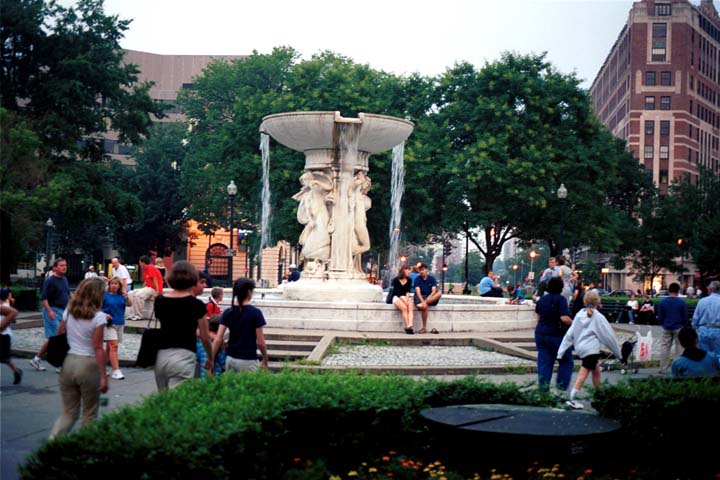
Dupont Circle
Dupont Circle:
This circle was, and still is, the last I heard, the Mecca Point in Washington, D.C. for youth, demonstrations, and tourist focal points interested in the " Radical 70's. "
Here too I once stroll with my girl on my arm, enjoying a little sugar from her, err a kiss for those of you who are not Southerners, during the late 60s and early 70s.
Thus it is to no surprise this focal point must be included. Youth cultural life of DC and all. Moreover, the shops which have grown up around this point in Washington, DC's urban landscape eventually attracted an adjacent Hotel development. This location was then, as it is still grown zero for the best shopping within the entire belt of Washington, D.C.
So when you come here to visit, or as those who live in DC will tell you, it is a good idea that you bring your credit cards too!
RMC / KA
This circle was, and still is, the last I heard, the Mecca Point in Washington, D.C. for youth, demonstrations, and tourist focal points interested in the " Radical 70's. "
Here too I once stroll with my girl on my arm, enjoying a little sugar from her, err a kiss for those of you who are not Southerners, during the late 60s and early 70s.
Thus it is to no surprise this focal point must be included. Youth cultural life of DC and all. Moreover, the shops which have grown up around this point in Washington, DC's urban landscape eventually attracted an adjacent Hotel development. This location was then, as it is still grown zero for the best shopping within the entire belt of Washington, D.C.
So when you come here to visit, or as those who live in DC will tell you, it is a good idea that you bring your credit cards too!
RMC / KA
Tuesday, July 25, 2006
An Introduction:
Karen Holzberg, Corcoran Gallery of Art, Washington, D.C and the Chicago Cultural Center, Chicago, IL
The exhibition embodyDISEMBODY brings together seven photographic and installation artists whose work addresses issues of corporeality. For each of these artists, the human form whether in presence, absence, or transformation is a vehicle for exploring the elegance of human existence. Their explorations range from core biological issues and consequences to the mystery of consciousness with all the beauty and fragility of simply being alive. The result is a dialogue between an anatomical view of the body and an emotive or metaphorical view of the body.
This exhibition thus speaks through the equal and eloquent codes of artist and scientist. At first glance, art and science may be viewed as two worlds hosting opposite poles of thought - or at least inhabiting opposite sides of the brain. In truth, they share a creative drive that has both intellectual and emotional dimensions. Both scientists and artists are similarly impassioned by intertwining spirals of ‘discovery,’ ‘experience’ and ‘meaning’ in our world. Yet there exists intangible aspects of living and being that neither art nor science working alone can fully impart. embodyDISEMBODY therefore explores a rich melding of the two.
embodyDISEMBODY reveals the intrinsic beauty in science, its methodology, its rituals and related accouterments. Instruments utilized in the process of scientific observation - glass vessels, precision gauges and scales - impart new realities when transformed into objects of observation themselves. An artist’s juxtaposition or isolation of these instruments gives as much power to their form as to their function, as much metaphor as empirical narrative. And just as scientists read and decode photographs, x-rays, and magnetic resonance images (MRI’s) to gain insight, so does the artist. This consequence of light and film can transform our views and perceptions of our own bodies, especially of the hidden worlds within. In fact, theorist Walter Benjamin once compared the camera to a surgeon’s knife in that the camera operated similarly on the human body by seeing it in fragments and was thus able to penetrate more deeply into its true existence and reality.
Visually, each of these artists utilizes photography in their approach to the theme of corporeality. For example, the x-ray images of Alan Stone and Sabrina Raaf communicate intimate yet anonymous testimonies of the interior structure of the body through the ethereal and sinuous lines of bone. When viewed by a non-scientist’s eye, these luminous sentinels of fragments can take on a lyrical and foreign beauty as well as metaphorical references to our physical being and ultimate temporality. In Karen Holzberg’s work we witness haunting physical and psychological studies of the emotive body through ‘kinesics’. As opposed to traditional scientific approaches, her work does not offer clinical truth or recorded reality but a felt and experienced reality: highly visceral and sensual representations of corporeal drama dissected into two groups, "Heads" and "Bodies." Debra Kaufman appropriates photographs from scientific textbooks documenting human subjects suffering from various physical diseases and maladies. On their bodies she collages faces of Renaissance sitters and thereby lends these deformed beings the poise of martyrs and saints. Kaufman’s compositions impart a new sense of beauty as well as aberration to her ‘models’ who customarily are subject to society's denial. Mary Jo Toles employs scientific processes in creating her art work including MRI’s and high-voltage photograms. Her richly toned images are tableaux or portraits primarily of brain sections - that central core of the human nervous system, home of the mind, seat of the self, sectioned, laid bare, and richly mapped. Holly Morrison’s work contains the most ethereal conceptions of the body. She uses photos of anatomy and other landscapes on which she paints in gouache, graphite, and ink with beautiful fluidity and coloring - rich crimsons and bone yellows - which suggest vital fluids and viscous elements. Her drawn lines vaguely outline human forms and ‘neural structures’ which seem to be both pushing forward and disappearing from the plane of the paper. Ilyse Soutine’s images represent the ultimate clinization of the body: the body as conspicuously absent, present only through the artifacts of institutional settings such as hospitals and prisons. She uses elements such as a box of tissue on a stainless steel table to represent, symbolically, human warmth and empathy but, visually, to emphasize their objectified and sterilized state.
Together, the works included in embodyDISEMBODY contain the resonance, the insight, and the empathy of artistic vision along with the inspiration and analytical tools of science. The result of this union is a penetration of emotional layers and bodily surfaces in order to find visual and intellectual meaning in the texts of corporeal existence.
"The most beautiful thing we can experience is the mysterious. It is the source of all true art and science."
Albert Einstein.
This should give you an initial attitude in which to view the ensuing spectra this blog is to introduce.
Yours,
Mr. Roger M. Christian
The exhibition embodyDISEMBODY brings together seven photographic and installation artists whose work addresses issues of corporeality. For each of these artists, the human form whether in presence, absence, or transformation is a vehicle for exploring the elegance of human existence. Their explorations range from core biological issues and consequences to the mystery of consciousness with all the beauty and fragility of simply being alive. The result is a dialogue between an anatomical view of the body and an emotive or metaphorical view of the body.
This exhibition thus speaks through the equal and eloquent codes of artist and scientist. At first glance, art and science may be viewed as two worlds hosting opposite poles of thought - or at least inhabiting opposite sides of the brain. In truth, they share a creative drive that has both intellectual and emotional dimensions. Both scientists and artists are similarly impassioned by intertwining spirals of ‘discovery,’ ‘experience’ and ‘meaning’ in our world. Yet there exists intangible aspects of living and being that neither art nor science working alone can fully impart. embodyDISEMBODY therefore explores a rich melding of the two.
embodyDISEMBODY reveals the intrinsic beauty in science, its methodology, its rituals and related accouterments. Instruments utilized in the process of scientific observation - glass vessels, precision gauges and scales - impart new realities when transformed into objects of observation themselves. An artist’s juxtaposition or isolation of these instruments gives as much power to their form as to their function, as much metaphor as empirical narrative. And just as scientists read and decode photographs, x-rays, and magnetic resonance images (MRI’s) to gain insight, so does the artist. This consequence of light and film can transform our views and perceptions of our own bodies, especially of the hidden worlds within. In fact, theorist Walter Benjamin once compared the camera to a surgeon’s knife in that the camera operated similarly on the human body by seeing it in fragments and was thus able to penetrate more deeply into its true existence and reality.
Visually, each of these artists utilizes photography in their approach to the theme of corporeality. For example, the x-ray images of Alan Stone and Sabrina Raaf communicate intimate yet anonymous testimonies of the interior structure of the body through the ethereal and sinuous lines of bone. When viewed by a non-scientist’s eye, these luminous sentinels of fragments can take on a lyrical and foreign beauty as well as metaphorical references to our physical being and ultimate temporality. In Karen Holzberg’s work we witness haunting physical and psychological studies of the emotive body through ‘kinesics’. As opposed to traditional scientific approaches, her work does not offer clinical truth or recorded reality but a felt and experienced reality: highly visceral and sensual representations of corporeal drama dissected into two groups, "Heads" and "Bodies." Debra Kaufman appropriates photographs from scientific textbooks documenting human subjects suffering from various physical diseases and maladies. On their bodies she collages faces of Renaissance sitters and thereby lends these deformed beings the poise of martyrs and saints. Kaufman’s compositions impart a new sense of beauty as well as aberration to her ‘models’ who customarily are subject to society's denial. Mary Jo Toles employs scientific processes in creating her art work including MRI’s and high-voltage photograms. Her richly toned images are tableaux or portraits primarily of brain sections - that central core of the human nervous system, home of the mind, seat of the self, sectioned, laid bare, and richly mapped. Holly Morrison’s work contains the most ethereal conceptions of the body. She uses photos of anatomy and other landscapes on which she paints in gouache, graphite, and ink with beautiful fluidity and coloring - rich crimsons and bone yellows - which suggest vital fluids and viscous elements. Her drawn lines vaguely outline human forms and ‘neural structures’ which seem to be both pushing forward and disappearing from the plane of the paper. Ilyse Soutine’s images represent the ultimate clinization of the body: the body as conspicuously absent, present only through the artifacts of institutional settings such as hospitals and prisons. She uses elements such as a box of tissue on a stainless steel table to represent, symbolically, human warmth and empathy but, visually, to emphasize their objectified and sterilized state.
Together, the works included in embodyDISEMBODY contain the resonance, the insight, and the empathy of artistic vision along with the inspiration and analytical tools of science. The result of this union is a penetration of emotional layers and bodily surfaces in order to find visual and intellectual meaning in the texts of corporeal existence.
"The most beautiful thing we can experience is the mysterious. It is the source of all true art and science."
Albert Einstein.
This should give you an initial attitude in which to view the ensuing spectra this blog is to introduce.
Yours,
Mr. Roger M. Christian
Subscribe to:
Posts (Atom)